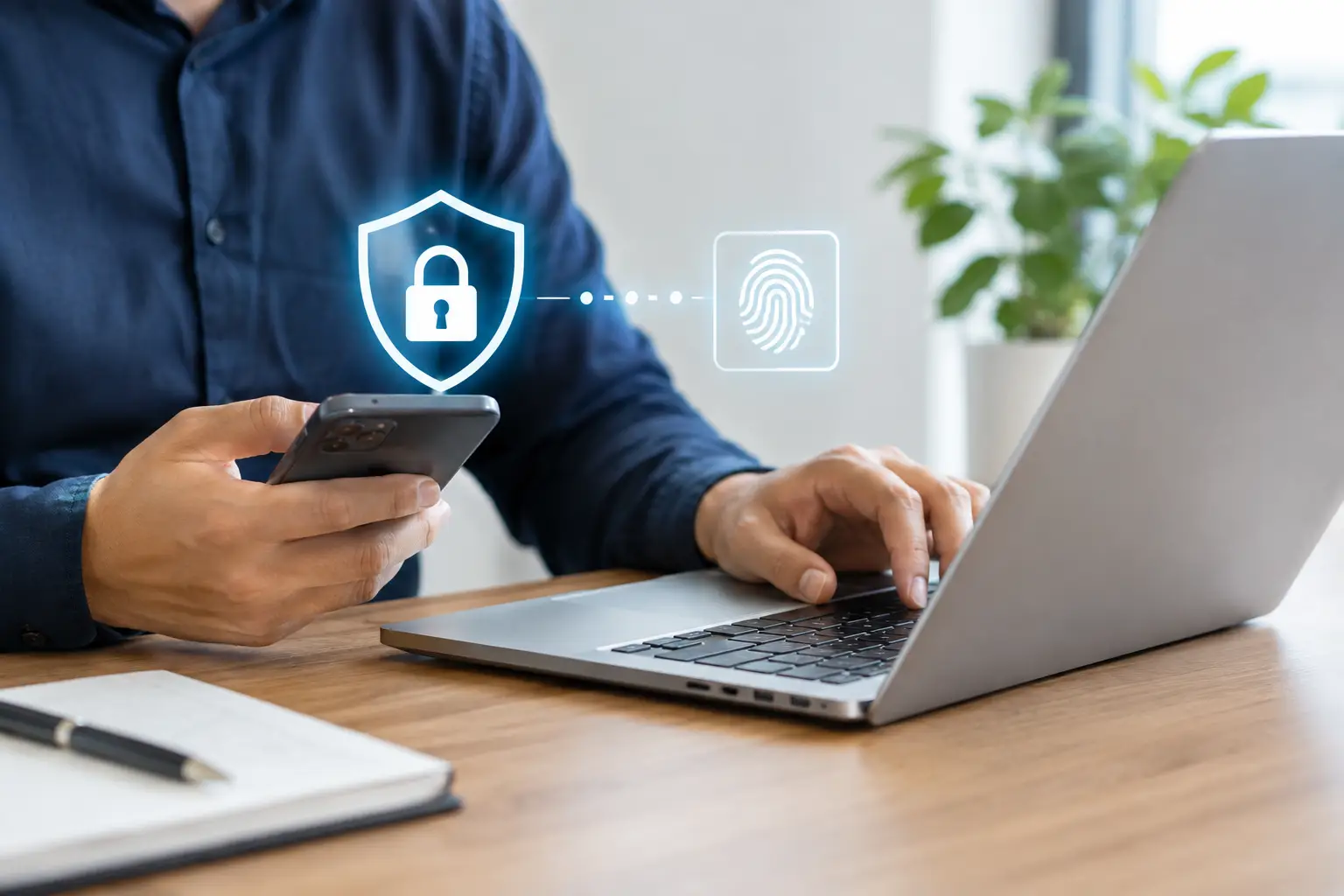

A server failure at 10:00 a.m., a phishing email reaching finance, or a Microsoft 365 access issue affecting remote staff can quickly turn into a business interruption. The question of in house versus outsourced IT is therefore not simply about who resets passwords or maintains laptops. It is a decision about how reliably your business can operate, protect its data, and recover when technology fails.
For organizations in Dubai and across the UAE, the right model depends on operational complexity, risk exposure, growth plans, and the internal capability already in place. A fully internal team can provide valuable business knowledge and close daily alignment. An outsourced IT partner can deliver broader technical coverage, 24/7 monitoring, and predictable support without the cost of building every capability internally. Many successful businesses use a combination of both.
The Real Decision Behind In House Versus Outsourced IT
The visible cost of IT is easy to compare: salaries, contracts, hardware, licenses, and support fees. The less visible cost is often more significant. It includes delayed response to outages, missed security updates, incomplete backups, unsupported users, and the productivity lost when an internal team is stretched across too many priorities.
An in-house IT department is typically strongest when the organization has highly specialized systems, a large technology footprint, or internal requirements that demand constant onsite involvement. A dedicated team understands business workflows, stakeholder preferences, and the history behind past technology decisions. That context can be difficult for an external provider to gain quickly.
However, internal IT teams also face a difficult coverage challenge. One or two capable professionals cannot reasonably provide help desk support, network engineering, endpoint management, cybersecurity monitoring, backup oversight, cloud administration, vendor coordination, and disaster recovery planning at the same level at all times. Annual leave, sickness, project workloads, and after-hours incidents can create gaps at precisely the wrong moment.
Outsourced IT changes the operating model. Instead of relying on individual availability, the business gains access to a structured service team with defined response procedures, monitoring tools, documentation, and escalation paths. The quality of that arrangement depends heavily on the provider. A reactive break-fix vendor is not the same as a managed IT partner accountable for continuity and performance.
When an In-House IT Team Makes Sense
Building an internal team can be a sound investment for larger organizations with a mature IT function and a clear need for permanent, onsite expertise. This is particularly relevant where technology is central to the product or service being delivered, where applications are heavily customized, or where business operations require daily coordination between technology and multiple internal departments.
An internal team also gives leadership direct control over priorities. If a business is implementing a major ERP platform, opening new sites, integrating an acquisition, or managing sensitive proprietary systems, internal staff can work closely with operational leaders and drive decisions without the handoff points that may exist in an external model.
The challenge is that control does not automatically create resilience. An internal team still needs the tools, training, processes, and depth of expertise to manage cyber threats, maintain backups, test recovery procedures, and support users outside standard business hours. Hiring for every specialty is costly, particularly when the need for a security analyst, cloud architect, or disaster recovery specialist may be occasional rather than full-time.
For a midsize business, an in-house IT manager supported by one or two technicians may be highly effective at handling daily operations. But that team may still need external expertise for security monitoring, infrastructure projects, emergency response, or business continuity planning.
What Outsourced IT Delivers
A managed IT provider is most valuable when it moves beyond ticket resolution and takes responsibility for the health of the environment. This usually includes proactive monitoring, patch management, endpoint protection, user support, network oversight, Microsoft 365 administration, backup management, and documented recovery procedures.
The immediate advantage is coverage. A professionally managed service can provide support capacity beyond the working hours of a small internal team, with specialists available when a network issue, ransomware alert, or failed backup needs attention. For businesses that cannot afford prolonged downtime, response speed and escalation discipline matter as much as technical skill.
Outsourcing can also make IT spending more predictable. Rather than absorbing unpredictable repair bills, recruitment costs, and emergency consulting fees, organizations can plan around a monthly service model tied to a defined scope. That does not mean outsourced IT is automatically less expensive. A low-cost provider that lacks security capability, clear documentation, or reliable response standards can create greater long-term risk.
The better question is whether the provider reduces exposure. Can it identify a failing device before it disrupts staff? Are critical systems monitored? Are patches applied consistently? Is Microsoft 365 data protected independently? Can the business restore systems from a verified backup if an incident occurs? Those are the measures that protect productivity and reputation.
Cybersecurity and Recovery Cannot Be Optional
Security is often the deciding factor in the in-house versus outsourced IT discussion. Cybersecurity requires continuous attention: phishing defenses, endpoint protection, access control, vulnerability remediation, log monitoring, user awareness, and incident response. A business may have capable internal generalists, but security operations are specialized and fast-moving.
Outsourced security services can provide the tools and skills needed to monitor threats more consistently, while internal leaders retain ownership of business decisions and risk policies. This arrangement is often practical for organizations that need stronger protection but do not require a full internal security operations center.
Backup and disaster recovery deserve the same scrutiny. A backup that has never been tested is not a recovery plan. Businesses should know which systems are protected, where backup copies are stored, how quickly they can be restored, and who is responsible for initiating recovery during an incident. The answer should cover more than servers. It should include cloud data, user endpoints, network configurations, and critical applications.
For UAE organizations with operational deadlines, customer commitments, or compliance requirements, recovery capability should be measured against acceptable downtime. If systems were unavailable for four hours, one day, or one week, what would the business lose? That answer helps determine the level of internal resources, outsourced support, and recovery investment required.
The Hybrid Model Is Often the Best Fit
The decision does not need to be all or nothing. A hybrid model allows a business to retain internal IT leadership and business knowledge while extending capacity through a managed service provider. The internal team can focus on strategy, user engagement, line-of-business applications, and high-value projects. The external partner handles routine monitoring, help desk coverage, cybersecurity controls, infrastructure maintenance, and emergency escalation.
This model is especially effective for growing companies. It avoids the delay and expense of hiring every technical role while ensuring that expansion does not outpace the organization’s ability to support and secure its systems. It also gives internal teams room to work on improvement rather than spending every day responding to repetitive incidents.
A strong partnership requires clear accountability. Define who owns user support, vendor management, security decisions, backup checks, project delivery, and executive reporting. Both parties should work from accurate documentation and shared service expectations. Without this clarity, a hybrid model can create confusion rather than coverage.
Questions Leaders Should Ask Before Choosing
Before deciding on a model, leadership should assess business risk rather than comparing only headcount and monthly fees. Consider whether the current team can support all users during an outage, whether critical systems are monitored after hours, and whether security incidents have a documented response path.
Also examine the quality of existing documentation. If passwords, network diagrams, asset records, and recovery instructions live only in one employee’s knowledge, the business has a continuity risk. An effective IT model makes operational knowledge accessible, controlled, and repeatable.
Finally, assess service expectations. A business that depends on constant system availability should not accept vague promises of support. It needs defined response commitments, proactive maintenance, tested recovery procedures, and regular reporting that shows what is being protected and improved.
FixIT Computer Technologies supports organizations that need this kind of accountable coverage, combining managed IT operations, cybersecurity, cloud support, and business continuity services with 24/7 emergency assistance and a 15-minute response commitment.
The best IT model is the one that gives your organization confidence on its busiest day and a clear path forward on its worst one. Choose the structure that lets your people work without disruption, gives leadership visibility into risk, and keeps recovery achievable when it matters most.